
What Do the EPC and Engine Warning Lights Mean on Volkswagen and Audi
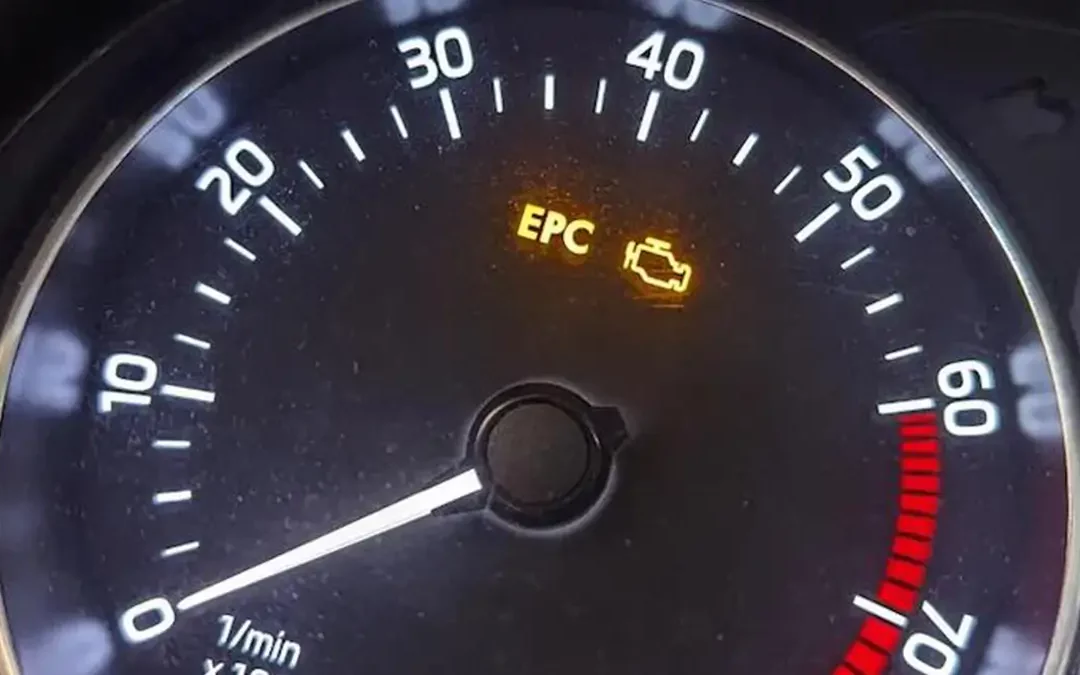
When a dashboard warning light appears, especially the EPC light or a combined EPC and engine warning light, it can be unsettling. Modern Volkswagen Group vehicles rely heavily on electronic systems to manage engine performance, throttle response, and emissions. When something falls outside expected parameters, the ECU triggers a warning to protect the engine and reduce the risk of damage.
This guide breaks down what the EPC light means, why it appears alongside the engine warning light, the most common causes, and what you should do next. It also includes practical links to related technical guides so you can better understand potential faults before booking a diagnostic.
What does the EPC warning light mean?

The EPC light stands for Electronic Power Control. It is mainly found in Volkswagen Group vehicles, including Audi, Škoda, SEAT and CUPRA models.
Unlike a standard engine warning light, the EPC system is linked to the electronic throttle control system. This includes components such as:
- Accelerator pedal position sensors
- Throttle body
- Engine control unit (ECU)
- Brake light switch
- Cruise control system
- Ignition and air intake sensors
When one of these components sends incorrect or inconsistent signals, the EPC light appears. In many cases, the vehicle may also enter limp mode to limit performance and protect the engine.
If your vehicle has reduced power or delayed throttle response, it is often directly linked to EPC-related faults rather than mechanical engine failure.
Common causes of the EPC light
The EPC warning light can be triggered by a wide range of issues, from simple electrical faults to more involved mechanical problems. Some of the most common include:
1. Faulty throttle body
Carbon build-up or sensor failure in the throttle body can affect air intake regulation. This often leads to hesitation, poor acceleration, or limp mode.
2. Brake light switch failure
A faulty brake switch can confuse the ECU, especially if the system incorrectly detects braking input while accelerating.
3. Ignition coil issues
Misfires caused by failing ignition coils are a frequent trigger, particularly on petrol engines.
4. Accelerator pedal sensor faults
If the pedal position signal is inconsistent, the ECU may limit engine output.
5. Wiring or sensor communication faults
Damaged wiring looms or poor sensor connections can interrupt signal flow between key components.
If your vehicle is misfiring or running unevenly, you may also want to read [Do ignition coils cause engine misfires?] for a deeper breakdown of symptoms.
EPC light vs engine warning light: what’s the difference?
The engine warning light (often called the check engine light) is linked to emissions and engine performance systems. The EPC light is more focused on electronic throttle control and drive-by-wire systems.
When both lights appear together, it usually indicates a more complex issue affecting multiple systems, such as:
- Air intake and fuel delivery imbalance
- Sensor communication errors
- ECU detecting inconsistent engine performance data
In these situations, the vehicle may still run, but performance is usually restricted.
If you are also experiencing hesitation under acceleration or reduced power, our guide to common turbocharger problems on Volkswagen and Audi vehicles can help identify whether forced induction issues are contributing.
EPC light and limp mode
One of the most common symptoms associated with EPC faults is limp mode. This is a protective state where the ECU limits engine power to prevent further damage.
Typical signs include:
- Reduced acceleration
- Limited RPM range
- Sluggish throttle response
- Restricted gear changes in automatic vehicles
If your DSG gearbox feels restricted or behaves unusually, it may be worth reading When to change your DSG fluid as transmission behaviour can sometimes be linked to engine management faults.
Engine warning light causes in Volkswagen Group vehicles
The engine warning light is broader in scope than EPC and is often linked to emissions or combustion efficiency issues.
Common causes include:
Carbon build-up
Direct injection engines are prone to carbon deposits on intake valves, which restrict airflow.
Oxygen sensor failure
Incorrect readings can affect fuel mixture and emissions control.
Mass airflow sensor issues
A faulty MAF sensor can lead to poor fuel economy and rough running.
Catalytic converter inefficiency
Often triggered after prolonged driving with unresolved misfires or fuel mixture issues.
If you suspect carbon build-up, our guide on Walnut blasting for carbon cleaning and misfire issues explains how intake deposits affect performance and drivability.
Real-world example of how non-engine faults can trigger EPC + engine lights
In some cases, the issue is not engine-related at all.
For example, after a minor accident affecting lighting components, a headlight module or control unit may be replaced. If the replacement module is not correctly coded, not fully compatible, or introduces a communication fault on the CAN network, it can trigger a cascade of warning messages.
This often presents as:
- “Stop/Start system malfunction”
- “Cruise control malfunction”
- EPC warning light
- Engine management light
- Transmission entering limp mode or restricting gear selection (often limited to lower gears or reduced automatic shifting behaviour)
In these scenarios, the engine itself may be mechanically fine, but the vehicle limits performance because the ECU receives inconsistent or missing data from other systems.
Can a battery cause EPC and engine lights?
Yes — a surprisingly common cause is battery type, condition, or voltage stability.
Modern Audi and Volkswagen Group vehicles rely heavily on stable voltage for control modules to communicate correctly. If a non-AGM battery is fitted where an AGM battery is required, or if the battery is weak or incorrectly registered/adapted, it can cause:
- EPC warning light
- Engine management light
- Start/Stop system malfunction
- Cruise control failure
- Random sensor fault codes
- Temporary gearbox restriction or limp mode behaviour
Even if the car starts and drives normally, low or unstable voltage can disrupt communication between modules, especially after short trips or repeated stop-start driving.
Transmission behaviour and limp mode interaction
When multiple control systems lose synchronisation due to electrical or communication faults, the gearbox control unit may also react defensively.
This can result in:
- Gearbox limiting itself to certain gears (e.g. not going beyond 4th in automatic mode)
- Normal operation returning in manual mode
- Delayed or harsh shifting
- Temporary limp mode that resets after restart.
This behaviour is not always a gearbox failure it is often a symptom of a wider electrical or network-level issue affecting engine and drivetrain control.
At this point, a structured diagnostic process is essential, including checking:
- Battery health and correct specification (AGM vs non-AGM)
- Charging system output
- Module coding after repairs (especially lighting or body control modules)
- CAN-bus fault history
- ECU and gearbox communication integrity
Diagnostic process: how faults are properly identified
Modern Volkswagen Group vehicles require manufacturer-level diagnostics to accurately pinpoint the root cause of EPC and engine warning lights.
A proper diagnostic process includes:
- Reading fault codes using OEM-level tools
- Live data analysis of throttle, airflow, and fuel systems
- Testing sensors under load conditions
- Checking ECU communication signals
- Physical inspection of wiring and components
This behaviour is not always a gearbox failure it is often a symptom
Guesswork often leads to unnecessary parts replacement, which is why structured diagnostics are essential.
For example, a fault code such as P200200 may initially suggest an emissions issue, but deeper analysis could reveal intake restrictions or sensor discrepancies. You can read more in our VW & Audi fault code P200200 repair guide.
Should you keep driving with an EPC or engine light?
In most cases, it is safe to drive for a short distance if the vehicle is behaving normally. However, you should avoid extended driving if:
- The car has entered limp mode
- There is a noticeable loss of power
- The engine is misfiring
- Both EPC and engine lights are active
Ignoring these warnings can lead to more serious damage, especially if combustion issues or turbo-related faults are present.
How does VassTechnik diagnose EPC and engine faults
At VAS Technik, we specialise in diagnosing and repairing Volkswagen Group vehicles. EPC and engine warning lights are some of the most common issues we see, and accurate diagnosis is critical to avoiding unnecessary repairs.
Our approach includes:
- Dealer-level diagnostics
- Live engine data analysis
- Fault tracing across ECU systems
- Mechanical inspection where required
- Clear explanation of findings before any work begins
Whether the issue is a failing ignition coil, throttle body malfunction, sensor fault or a more complex engine management issue, the goal is always to identify the exact cause first.
We also work regularly with issues such as DSG faults, turbocharger problems, and carbon build-up, which can all contribute to warning light activation.
Frequently Asked Questions
What does EPC mean on a car?
EPC stands for Electronic Power Control and relates to the electronic throttle and engine management system.
Can a low battery cause an EPC light?
Yes, low voltage can cause sensor misreads and trigger EPC warnings.
Is EPC light serious?
It depends on the cause. Some issues are minor, but others can affect engine safety and performance.
Why do EPC and engine lights come on together?
This usually indicates multiple system faults affecting both engine performance and electronic control systems.
How to respond to EPC and engine warning alerts
If your vehicle is showing warning lights, reduced power, or unusual behaviour, VAS Technik can help identify the issue quickly and accurately.
We specialise in Volkswagen Group diagnostics and repairs, using manufacturer-level tools to pinpoint faults before any repairs are carried out.
Whether your vehicle has entered limp mode, developed a misfire, or is showing persistent warning lights, we can assess the issue and advise on the most effective repair path.
Book your vehicle in for a diagnostic check, or get in touch with our team if you would like advice before visiting.